08 Sep 2026
Ayurveda to Take the Indian Perspective to the 2026 SCO Forum on Traditional Medicine in China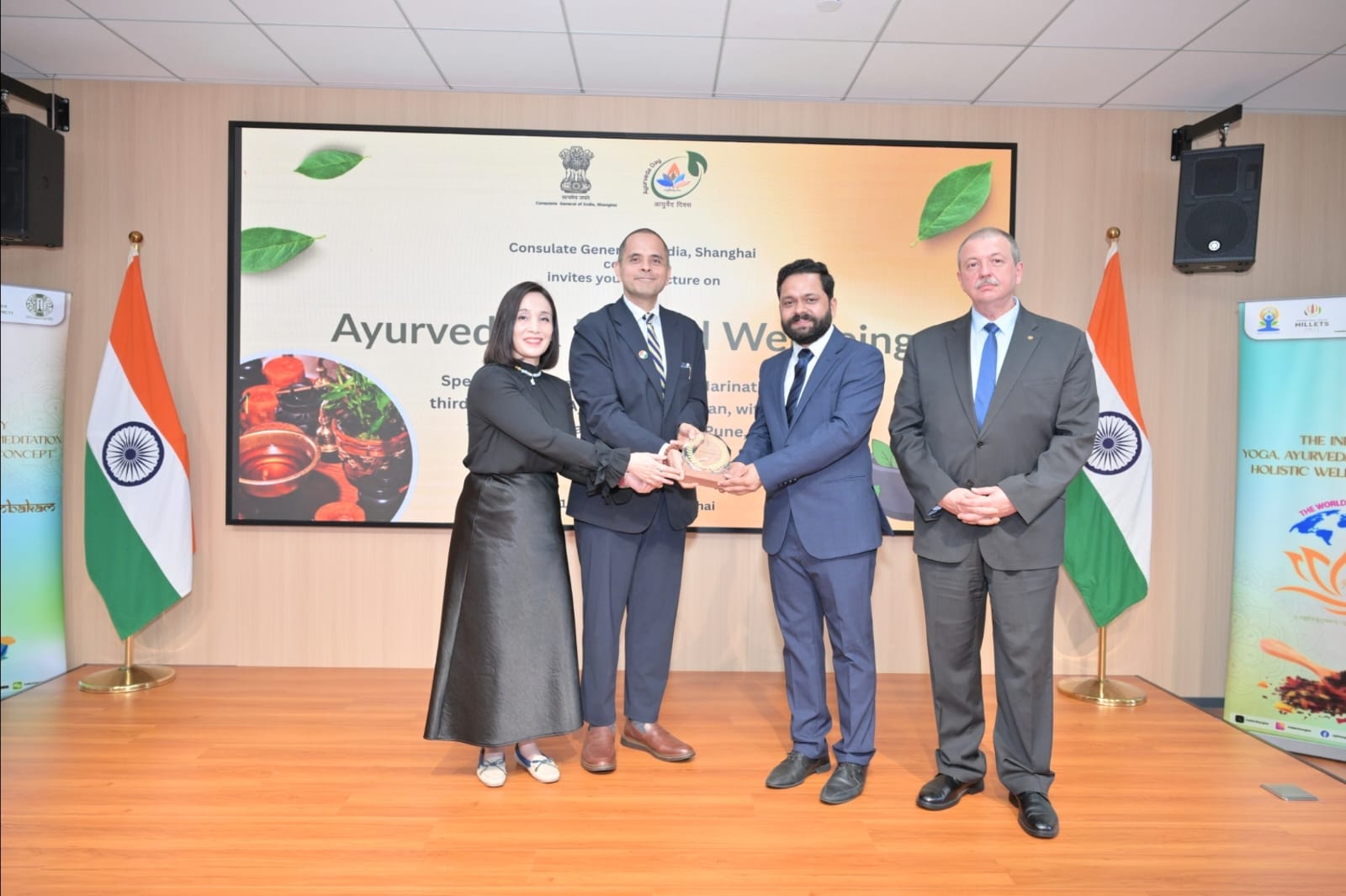
- Admin
- 08 September 2026
Ayurveda to Take the Indian Perspective to the 2026 SCO Forum on Traditional Medicine in China
Ayurveda to Take the Indian Perspective to the 2026 SCO Forum on Traditional Medicine in China
Dr. Dhanwantari Jha to represent the Indian Ayurvedic perspective at the SCO Forum on Traditional Medicine in Nanchang, China, from September 16–18, 2026
September 2026 | Nanchang, Jiangxi, China
Ayurveda is set to bring an Indian perspective to the international dialogue on traditional medicine at the 2026 Shanghai Cooperation Organisation (SCO) Forum on Traditional Medicine in Nanchang, Jiangxi Province, China.
Dr. Dhanwantarikumar Harinath Jha, Indian Ayurvedic physician and international Ayurveda educator, has been invited to participate in the academic dialogue on traditional medicine education at the Forum, scheduled to take place from 16–18 September 2026.
Ahmedabad Mirror has highlighted the upcoming participation under the headline “Ayurveda to Take Indian Perspective to 2026 SCO Forum on Traditional Medicine in China,” describing Dr. Jha as India’s only Ayurveda representative at the academic dialogue.
Read the full Ahmedabad Mirror coverage
Why the SCO Forum Matters for Ayurveda
The SCO Forum on Traditional Medicine has become an important platform for dialogue and cooperation among countries associated with the Shanghai Cooperation Organisation.
According to the official Forum website, the SCO Forum on Traditional Medicine has been held annually since 2020, with Nanchang and Jiangxi Province playing a significant role in several editions. Its discussions have focused on inheritance, innovation, mutual learning, international cooperation and the development of traditional medicine.
The 2026 Forum provides an opportunity to bring a distinctly Indian perspective into this growing international conversation.
For Ayurveda, this is particularly significant because the internationalisation of traditional medicine is not simply about promoting treatments. It also involves questions of:
- Traditional medicine education
- Academic standards and curricula
- Professional training
- Qualification and mutual recognition
- Preservation of classical knowledge
- Digital technology and education
- International academic cooperation
- Responsible globalisation of traditional medical systems
These are areas in which India has considerable experience through its established Ayurveda education system.
India, China and Two Great Traditional Knowledge Systems
India and China are home to two of the world's major traditional medical knowledge systems — Ayurveda and Traditional Chinese Medicine (TCM).
While Ayurveda and TCM have developed through distinct philosophical, theoretical and clinical traditions, both represent sophisticated systems of traditional knowledge that have evolved over centuries.
This creates an important opportunity for mutual learning rather than competition.
The future of traditional medicine can benefit from platforms where different systems can share experiences in education, preservation of knowledge, research, professional development and international cooperation.
The SCO framework provides one such platform.
The official SCO Forum records also demonstrate the organisation's continuing interest in traditional medicine cooperation, including international exchange, education and collaboration among participating countries.
Ayurveda's Growing Educational Presence in China
Dr. Jha's participation in the Nanchang Forum follows an extensive period of Ayurveda education and outreach activities in China during July and August 2026.
These programmes have included engagements in Huzhou, Changshu, Suzhou, Hangzhou, Shanghai and Beijing, together with academic and professional interactions involving the Indian diplomatic missions in China.
This work reflects a broader objective: creating opportunities for people in China to understand Ayurveda not only as a wellness tradition, but also as a structured Indian knowledge system with its own educational framework, classical literature and professional tradition.
Through Ayurved Nidhi, Dr. Dhanwantari Jha and Dr. Nidhi Jha have been involved in international Ayurveda education since 2017, with programmes and students extending across several countries, including China, Japan, the United States, Russia, the United Kingdom and Canada.
From Ayurveda Education to International Dialogue
The Nanchang invitation represents an important progression in this journey.
International Ayurveda education begins with creating awareness and understanding. It develops further through structured teaching, academic exchange and professional interaction. Ultimately, it can contribute to larger conversations about how traditional knowledge systems can participate responsibly in the modern international landscape.
The SCO Forum on Traditional Medicine provides an opportunity to take that conversation to a broader level.
The discussion around traditional medicine education is especially important because the future of these systems depends not only on preserving historical knowledge, but also on ensuring that future generations receive appropriate, systematic and academically responsible training.
Ayurveda and the Changing India–China Relationship
The 2026 Nanchang Forum also takes place at an important moment in India–China relations.
The upcoming participation follows renewed high-level engagement between India and China, including the interaction between Prime Minister Narendra Modi and Chinese President Xi Jinping at the 26th SCO Summit in Bishkek.
The timing is significant for traditional medicine as well.
India's role in the SCO has already contributed to expanding the organisation's areas of cooperation. The SCO Secretary-General noted in May 2026 that during India's 2022–23 chairmanship, India initiated several new areas of cooperation, including traditional medicine, alongside startups and innovation, new types of fuel and Buddhist heritage.
Against this background, Ayurveda's participation in a traditional medicine dialogue in China carries significance beyond a single conference.
It represents an opportunity for academic exchange, civilisational dialogue and people-to-people engagement between India and China through traditional knowledge.
A New Chapter for Ayurveda in China
For Ayurveda, China represents an important and growing area for international education and cultural exchange.
The objective is not to replace one traditional medicine system with another, nor to create a competition between Ayurveda and TCM.
Instead, the opportunity is to create greater understanding.
Ayurveda can bring the Indian experience. TCM can bring the Chinese experience. The SCO can provide a platform for dialogue.
Such exchanges can contribute to a more informed global understanding of traditional medicine while respecting the individual identity, history and principles of each system.
Looking Ahead to Nanchang
From 16–18 September 2026, the focus will move to Nanchang, Jiangxi.
Dr. Dhanwantari Jha's participation will bring the Indian Ayurvedic perspective into discussions surrounding traditional medicine education, professional development and international cooperation.
For the Ayurveda community in India and around the world, it is an opportunity to see Ayurveda participating in an international forum alongside traditional medicine stakeholders from across the SCO community.
For India and China, it is another opportunity to build bridges through education, traditional knowledge and civilisational exchange.
And for the journey of Ayurveda in China, it marks another important step:
From teaching Ayurveda in China to taking the Indian Ayurvedic perspective to an international SCO platform.